Build Better Faster Pipelines For Tech Teams With TheDataOps.org
Introduction
Picture a giant toy train set that carries letters across a busy room. When tracks connect tightly, every box reaches the right station on time. But one loose track causes toys to crash across the floor.
Modern companies move billions of tiny puzzle pieces every single minute. When people move files by hand, they drop important letters.
TheDataOps.org shows people how to lay smooth tracks for digital information. Anyone can learn how to build automated lines that never drop a box.
You pick up practical skills that stop annoying computer bugs. Then you help busy teams make great choices every day.
Why Teams Need Modern Data Delivery
Smart companies treat information like fresh milk in a delivery truck. It must arrive fast, cool, and clean.
Long ago, workers moved numbers with slow, clumsy spreadsheets. People made typos, and bosses read bad reports three weeks late.
Now, clever systems run automatic checks before anything hits a manager’s desk.
- Quicker Answers: Bosses see daily sales numbers over breakfast.
- Fewer Headaches: Teams spend less time hunting down broken files.
- Happier Coworkers: Builders and business leaders smile together every morning.
Field research shows that broken numbers cost offices huge piles of money. Good habits save valuable hours and keep projects moving ahead.
Step By Step Learning Through A DataOps Course
A friendly DataOps Course guides your steps on a clear trail. You begin with basic ideas before touching any tricky buttons.
First, you study how raw information enters large cloud vaults. Next, you write little checkmarks that throw out blank boxes.
Then, you link your clean tracks to bright charts that leaders love. Short lesson videos guide every single mouse click.
Nobody gets left behind because each topic connects to the last one. Fun practice questions check your memory so lessons stick for good.
Launch Your Career As A DataOps Engineer
A handy DataOps Engineer builds the digital rails that carry critical facts. Many curious people find a wonderful home in this line of work.
- Software Makers: Programmers who want to move giant streams of cloud traffic.
- Math Lovers: Researchers who need clean tables without waiting weeks.
- Cloud Helpers: System caretakers who enjoy setting up safe guardrails.
- Eager Learners: Students who seek well-paying technical jobs right away.
These builders solve fun riddles day after day. They build systems that help doctors save lives and help schools teach children.
Hands On Practice Through DataOps Training
Anyone can learn to build neat data paths with regular practice. Practical DataOps Training slices giant problems into small, easy chores.
You learn how to send files from city to city without drops. Next, you set up loud sirens that buzz when leaks appear.
Learners work with real homework taken from real tech shops. For instance, a student named Maya learned to catch duplicate billing records.
Because she fixed actual broken files in class, she helped her new office immediately. True skill grows when you click buttons and build models yourself.
Old Spreadsheets Versus Modern Automation
| Daily Task | The Clunky Old Style | The Modern Fast Style |
|---|---|---|
| Checking Numbers | People stare at tiny rows for hours | Smart programs test files in seconds |
| Fixing Broken Rows | Teams cry during late-night panics | Alarms show the bug right away |
| Updating Logic | Done twice a year with fear | Shipped safely every single afternoon |
| Sharing Findings | Locked behind confusing email chains | Shown on live dashboards for all |
Earn Real Respect With A DataOps Certification
Tests tell future employers that you hold genuine talent. A verified DataOps Certification shows hiring managers your engineering skills.
Tech directors want problem solvers who fix messy files quickly. So, holding a shiny credential puts your resume right at the top.
Job market surveys reveal that certified creators find jobs much faster. They earn higher wages because companies need solid information immediately.
Earning your badge proves you respect accuracy, protection, and speed. You show the world you can guard big systems without error.
Fix Boring Work With Data Pipeline Automation
Typing identical words fifty times every day makes people tired. Data Pipeline Automation lets computer helpers finish the boring chores.
Clever scripts wake up at midnight to grab fresh online orders. Next, they reshape uneven numbers into matching patterns.
Then, they hand final totals to money bosses before sunrise. You never have to wake up early to push boring buttons.
Automation wipes away human typos so processes run smooth seven days a week.
Guide Big Groups With DataOps Consulting
Massive stores and health centers often deal with messy files. Expert DataOps Consulting shows these large groups how to build neat systems.
Guides look at current setups to see where numbers usually break. Then, they sketch simple plans to automate slow jobs.
One grocery chain wasted three hours every day typing receipts into boxes. Friendly advisors built an automatic sorter for them instead.
Soon, store leaders received accurate inventory counts every dawn. Helpful guidance turns confusing workplaces into happy spots.
Pick Helpful Tools For Smooth Workflows
Skilled craftspeople pick the best wrench for every loose bolt. Popular DataOps Tools run your paths and check your records around the clock.
Engineers use Apache Airflow to set up task schedules like school bells. They rely on Kafka to blast fresh messages across oceans.
Programs like Kubernetes keep all your web apps spinning safely. Grafana draws bright graphs so you see machine health at a glance.
Knowing these top utilities helps you chat easily with other builders. You choose great gears to keep your software factory running fine.
Combine Everything On A DataOps Platform
A solid DataOps Platform places scattered tools onto one big desktop. Instead of opening twelve browser tabs, workers open one clean screen.
This single window reveals every incoming stream of numbers. If a strange row slips in, the machine catches it like a spider.
Only fresh, tidy facts reach everyday phone screens. Major banks use these safe rooms to follow tough safety laws.
Shared hubs save time because workers stop chasing mystery errors in dark corners.
Stop Bad Facts With Data Quality Management
Silly numbers create giant headaches for company bosses. Careful Data Quality Management builds safety nets around company files.
It hunts for missing phone numbers, double names, and weird letters. For example, nobody can type a negative age on a sign-up page.
Clever filters kick goofy entries out of the pool instantly. So, managers only look at real, solid truths.
Spotless files create deep trust between web shops and their shoppers.
Spot Hidden Problems With Data Observability
Nobody can fix a broken pipe hidden beneath thick basement cement. Data Observability shines a bright flashlight straight into computer pipes.
It checks if numbers arrive fresh, whole, and on time. If a site sees zero orders on a busy Saturday, an alarm screams.
Technicians spot the exact broken junction within seconds. Because they catch tiny cracks right away, shoppers never face crashed apps.
Full vision keeps your whole cloud system running happily.
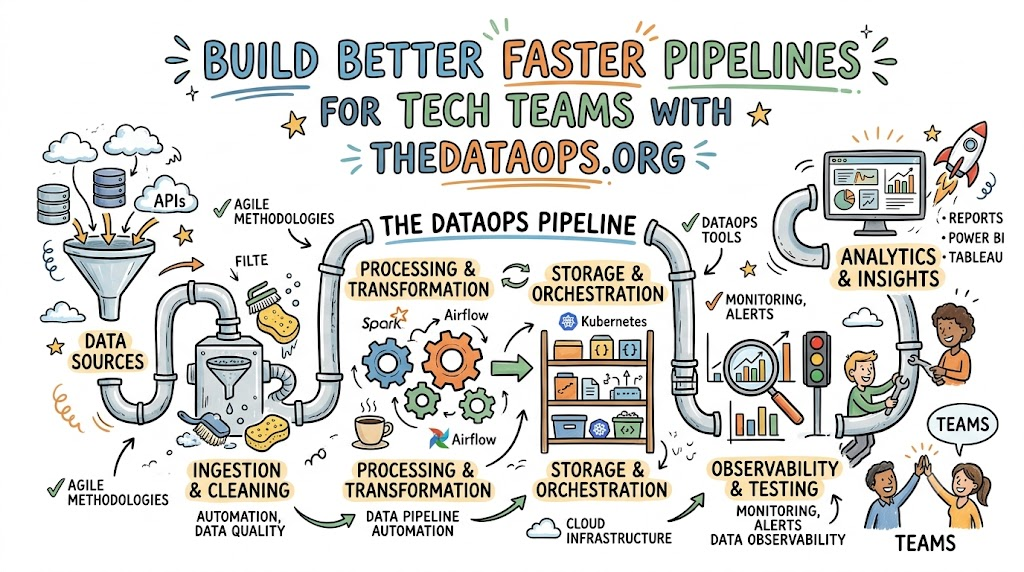
A Simple Five Step Quality System
Tidy information demands a crystal-clear checklist. Great teams use five easy actions to keep files crisp and safe:
- Grab: Pull in fresh text from websites and mobile apps.
- Scrub: Wash away double entries, blank boxes, and wrong dates.
- Test: Run automatic robot rules to check math totals.
- Pass: Deliver the finished sheets to executive screens.
- Track: Watch the flow day and night for unexpected hiccups.
Sticking to this easy path stops computer errors before they spread.
Roles Inside The Tech World
| Title | Core Mission | Favorite Activity |
|---|---|---|
| DataOps Engineer | Builds automated tracks and pipes | Loves writing tests and robot scripts |
| Data Analyst | Reads colorful charts to help sales | Enjoys finding neat stories in graphs |
| Data Scientist | Writes smart programs that spot trends | Loves playing with big math equations |
| Data Architect | Maps out giant storage blueprints | Enjoys planning organized digital cities |
Frequently Asked Questions About TheDataOps.org
How does TheDataOps.org assist new learners?
TheDataOps.org teaches learners how to construct rapid, trustworthy data lines with easy guides and practice drills.
Who should check out the lessons here?
Students, web coders, number fans, and tech guides can all learn great things here.
Must someone know heavy code before starting?
No, basic mouse skills and an open mind are enough to begin the first lesson.
Why do robot checks matter so much?
Robot tests catch bad numbers instantly so false reports never fool company leaders.
Which tech engines will students meet?
You will touch Airflow, Kafka, Docker, Kubernetes, and popular cloud data hubs.
Does a certificate help someone secure a job?
Yes, clean certificates show hiring teams that you know how to build real things.
How does DataOps differ from DevOps?
DevOps speeds up software creation, while DataOps speeds up clean information delivery.
Why do companies talk about observability?
Observability acts like a smoke alarm that chirps the second files go missing.
Can tiny startups apply these lessons?
Yes, tiny groups save huge chunks of time by automating repetitive daily tasks.
Where do leaders find consulting help?
Firms can link with experienced guides to improve their current pipes and eliminate manual steps.
Final Thoughts
Every growing enterprise leans on swift, honest facts. Broken lines create giant messes and slow down everyone’s work.
Gaining pipeline talents opens up a fun, rewarding road in modern technology.
You gather practical tricks to sweep away bugs and ship spotless numbers.
Jump into the lessons, build neat tracks, and boost your builder abilities with TheDataOps.org today.
Leave a Reply