Super Fun Ways Smart Machines Work Together With RobotsOps
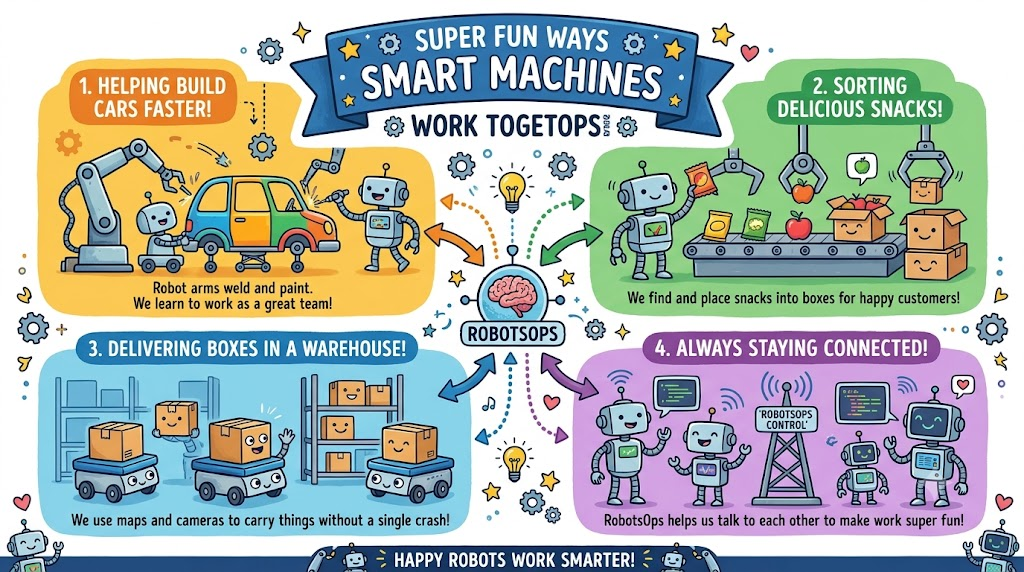
Look around your room. Real machines build your sneakers, toys, and computers every day.
Hundreds of busy helpers pack boxes and carry heavy metal parts across shiny warehouse floors. Even so, these machines sometimes drop tools or lose battery power. Clever thinkers created a brand new playbook called RobotOps to solve these mix-ups.
This smart method keeps metal helpers happy, charged, and quick. Workers track the bots, send new brain files, and catch errors right away. Now, let us jump into this magical world of teamwork.
The Awesome Energy of Robotics Operations
Robotics Operations teaches us how to guide rolling and lifting helpers with ease. We make sure every machine does its daily chores on time.
My uncle Joe once wasted five hours tracking one quiet roller bot across a giant depot. He walked miles until he found it hiding behind a pile of cardboard boxes. Modern computer setups fix this headache over the airwaves in a blink.
New factories build neat morning routines for their rolling friends. Screens track low juice long before any motor stops turning. Because helpers stay charged, daily assembly runs with zero fuss.
A friendly learning space named RobotsOps shares cool tricks about these methods. Anyone can read its fun lessons to build their own robot care skills.
Rolling Smart With Autonomous Mobile Robots
Have you ever spotted a box on wheels scooting through a grocery aisle? People call these clever helpers Autonomous Mobile Robots.
They use spinning laser beams and cameras to draw room maps on the go. If a puppy steps into the aisle, the helper halts immediately. It takes a new route, smiles with green lights, and rolls along.
+--------------------------------------------------------------+
|               Autonomous Mobile Robot Senses                 |
|                                                              |
|   [ Laser Eyes ]  -----> Scans walls and moving objects     |
|   [ Wheel Counters ] --> Measures distance across the room   |
|   [ Front Camera ] ----> Spots floor signs and sudden bumps  |
+--------------------------------------------------------------+
One city clinic used six small delivery rovers last spring. Nurses saved eight thousand steps every shift because rovers carried pill boxes for them. That gave nurses more time to read stories to young patients.
The crew at RobotsOps explains how rolling machines dodge chairs and find charging pads. Their guides show how wheels, wires, and cameras work as one team.
Cool Brain Power: Robotics Software and ROS 2
Cold metal frames cannot move without lively code. Robotics Software gives each machine its thought processes and lightning-fast reflexes.
It turns camera snapshots into numbers so the helper can pick up a wooden block. Without strong code, a machine just sits on the carpet like a paperweight.
Coders build these thinking steps with a free tool suite called ROS 2. This name means Robot Operating System. ROS 2 acts like a walkie-talkie network, so motors and cameras share quick whispers.
| Tool Component | What It Does | Why Machines Love It |
| Camera Sensor | Grabs live pictures | Spots walls and blocks |
| ROS 2 Network | Sends fast messages | Connects eyes to wheels |
| Motor Drivers | Spins wheels and gears | Powers smooth moves |
| Battery Monitor | Checks remaining power | Prevents sudden naps |
RobotsOps offers easy step-by-step activities that teach ROS 2 skills. Kids and creators learn how to make motors move with simple code lines.
Team Power Through Robot Fleet Management
Guiding one toy car feels simple, but running seventy helpers needs big coordination. This team trick is called Robot Fleet Management.
It behaves like a city traffic light system during morning rush hour. It stops rollers from bumping heads in tight storage lanes. Plus, it guides tired bots to electrical wall docks before their batteries fade.
- Live maps: Shows every moving cart on one colorful screen.
- Health alerts: Spots squeaky wheels before gears wear down.
- Instant updates: Sends new brain code through the air without cables.
- Job sharing: Gives new packing tickets to free helpers nearby.
Modern factories report twenty percent more work done when fleet tools run the show. Goods reach toy shops way faster.
Big Muscle Work With Industrial Robotics
Car plants pick huge steel arms known as Industrial Robotics for rough jobs. These shiny giants hoist engine blocks, glue windshields, and paint roofs with pinpoint precision.
Auto engineer Carla Gomez shared a great secret with me: “Steel arms never lose focus, but they need watchful sensors to stay safe.” Optical eyes tell the metal fingers exactly where to grip a glass panel.
Light barriers keep factory workers totally safe around the clock. When a person steps past the yellow tape, the giant arm freezes in less than a second. Both humans and metal friends share the same shop floor in peace.
The RobotsOps library shows how strong steel limbs pair with smart controllers. Readers discover how heavy tools craft trucks, trains, and swing sets.
Safe Practice With Robot Simulation
You should never dive into a deep pool before learning how to paddle. Programmers follow this safe rule through Robot Simulation.
This method creates a vivid video game world inside your desktop screen. You test your bot across steep gravel hills or rainy sidewalks right on your monitor. If the virtual bot tumbles, your wallet and real metal stay safe.
- Draft a digital model: Paint your machine inside computer software.
- Turn on simulated gravity: Add slick ice, bumps, and breezy winds.
- Drive test laps: Send the machine through virtual obstacle courses.
- Polish the program: Fix silly glitches before turning on real switches.
Testing on screens saves piles of time and stops costly metal damage.
Smarter Days With Robotics Automation
We celebrate Robotics Automation whenever helpful machines take on dirty, tiring, or risky chores.
It helps bakers drop the exact same amount of frosting onto thousands of cupcakes. It helps sorting bins pick ripe yellow bananas from green bunches. Because gears tackle the boring grind, human workers design new games, draw pictures, and solve bigger problems.
- Postal organizers: Sort letters into zip code bins in seconds.
- Farm scouts: Pick weeds while leaving young corn stalks alone.
- Clean-up rollers: Sweep and mop cafeteria tiles while schools sleep.
RobotsOps details how handy tools brighten daily human routines across towns and farms.
Inside the Robotics Operations Center
Spaceships have NASA mission control desks, and mega fleets use a Robotics Operations Center.
Tech pros sit in comfy rolling chairs in front of huge glowing displays. They spot a warm motor ten towns away before anything gets ruined. If a cart gets stuck behind a stray garbage can, an operator steers it clear with a joystick.
- Observe metrics: Watch rolling speed, gear heat, and power levels live.
- Take remote control: Steer lost rollers past fallen boxes using game pads.
- Plan tune-ups: Order fresh grease and bolts before old parts wear out.
RobotsOps opens a window into these mission control hubs with neat tutorials.
Ten Questions About RobotsOps
What is the main purpose of RobotOps?
It brings smart computer habits to the everyday care of hard-working machine teams.
Why do makers prefer ROS 2?
It lets cameras, wheels, and circuit boards talk together with simple messages.
What job does a fleet manager perform?
This brainy software directs machine traffic so bots finish their tasks without traffic jams.
Can machines try out tasks inside computers?
Yes, bots drive through digital game worlds so developers patch bugs safely.
How do autonomous mobile robots sense walls?
They use spinning lasers, floor cameras, and wheel counters to draw live floor maps.
What takes place in a robot control room?
Trained humans watch wide video boards to keep every working machine healthy.
Why does screen practice beat real tests?
Virtual practice protects costly metal parts from breaking when new code slips up.
Where do students discover robotics operations guides?
The RobotsOps platform shares free walkthroughs about code, control rooms, and robotic arms.
How do big factory arms protect people?
They watch optical safety zones that cut motor power the instant a foot crosses the line.
Can an engineer guide dozens of rollers alone?
Yes, clean fleet dashboards show all units at once so one person runs the whole pack.
Stepping Into Tomorrow With RobotsOps
Smart machines brighten our world, deliver our packages, and build our tools. Picking up skills to direct these metal buddies opens wide doors for your future. Friendly study platforms like RobotsOps make every single lesson clear, fun, and easy to test out. Stay excited, tinker with simple projects, and enjoy the adventure of tomorrow.
Leave a Reply